Now This
-
Howl’s Moving Castle (2004)
Sophie is a young hatter who ventures out of her hat shop one day and gets stopped by aggressive soldiers in an alley. Howl, a well-known wizard, can see she’s bothered and whisks her away from the situation with the soldiers, but as they make a run for it, she realizes that Howl himself is in trouble and is being chased by shadowy creatures. Later, the Witch of Waste, who is enamored with Howl, catches wind of their alleyway encounter and in an act of jealousy, casts a spell on Sophie which turns her into an old woman, saying “you won’t be able to tell anyone about that spell.” Wanting…
-
Monster (2023)
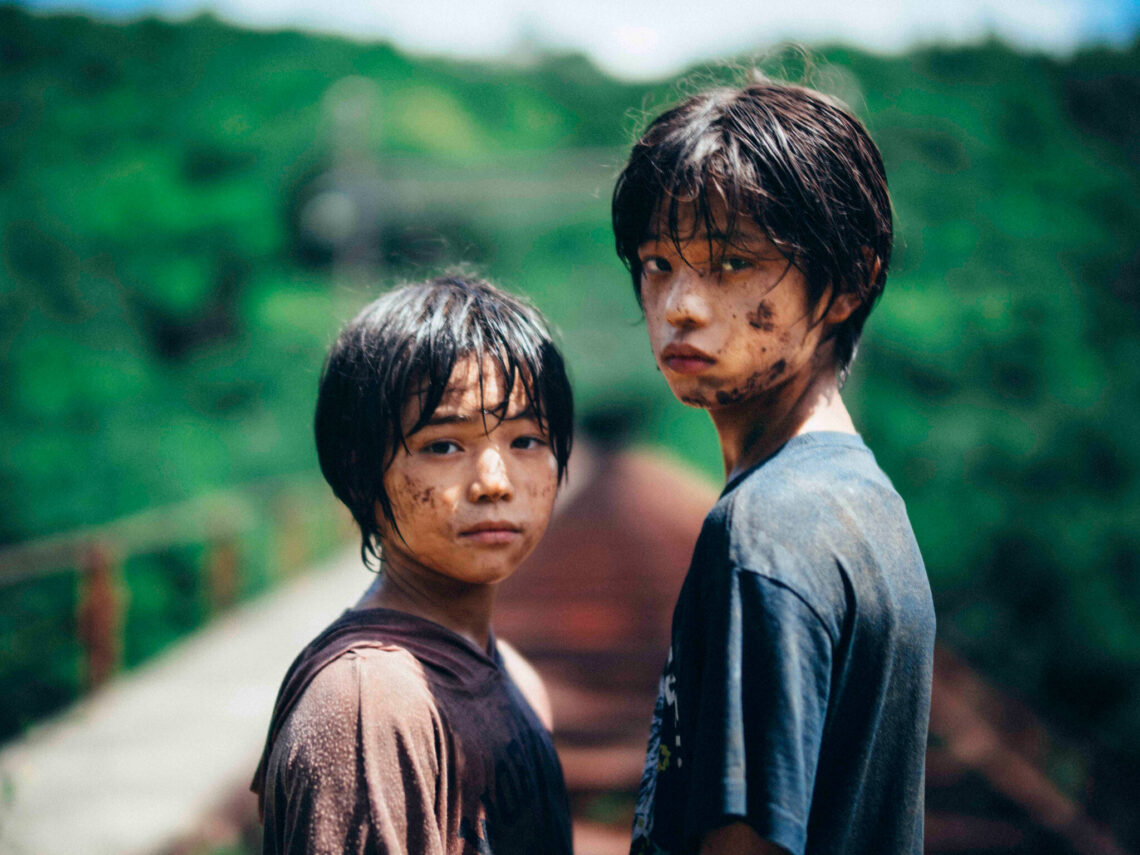
Monster opens with a building on fire, as fifth grader Minato (Soya Kurokawa) and his single mom, Saori Mugino (Sakura Andō, also known for Shoplifters and Godzilla Minus One), watch from their balcony. After the fire, rumors that Minato’s teacher Mr. Hori (Eita Nagayama) frequented the disreputable hostess bar in the burning building start spreading. Saori has heard the rumor and this may have planted a seen of distrust for Mr. Hori in Saori’s mind. One night, Saori comes home and finds hair clippings in the bathroom and realizes that Minato isn’t home. She goes out looking for him and finds him in an abandoned tunnel with a bandaged and…
-
The Tale of the Princess Kaguya (2013)
One day, while gathering bamboo stalks in the forest, a farmer is amazed to find a mysterious sprout that grows incredibly fast right before his eyes. The plant flowers and opens to reveal a tiny little girl inside of the flower, whom the farmer believes was sent from heaven for him to take care of, so he takes the tiny girl home with him. Once home, the farmer’s wife holds the little forest nymph and she turns into a baby, which the couple care for. They, with the help of the neighborhood children, name her Princess Takenoko (“Little Bamboo”). Their baby grows fast, and before they know it, she is…
-
Tokyo Story (1953)
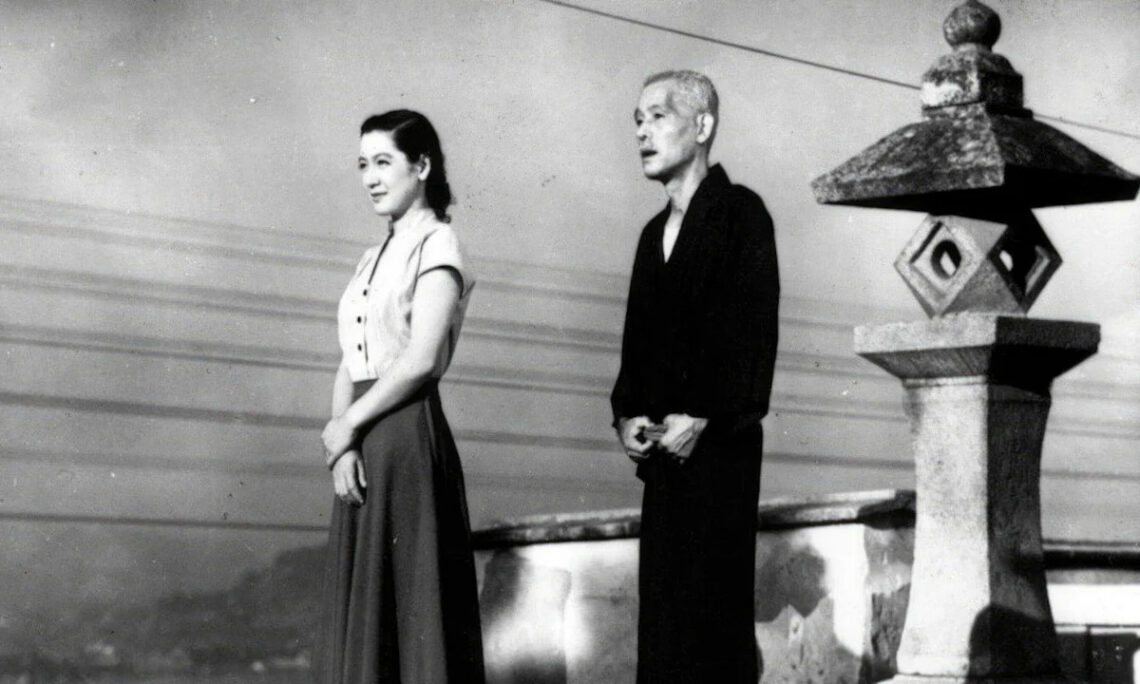
In Tokyo Story, an aging couple take a trip from their city of Onomichi to Tokyo to visit their adult children and grandchildren. The movie opens with scenes of every day life in Onomichi: ships passing, children walking to school, and a train chugging along at the base of the mountains. In the Hirayama house, the aging couple are getting ready for a trip to visit their two oldest children, Kōichi who is a physician, Shige who is a hairdresser, and their widowed daughter-in-law, Noriko, who was married to their middle son, Shōji. Their youngest daughter, a teacher named Kyōko, lives with them and helps them get ready. The opening scenes…
-
Ocean Waves (1993)
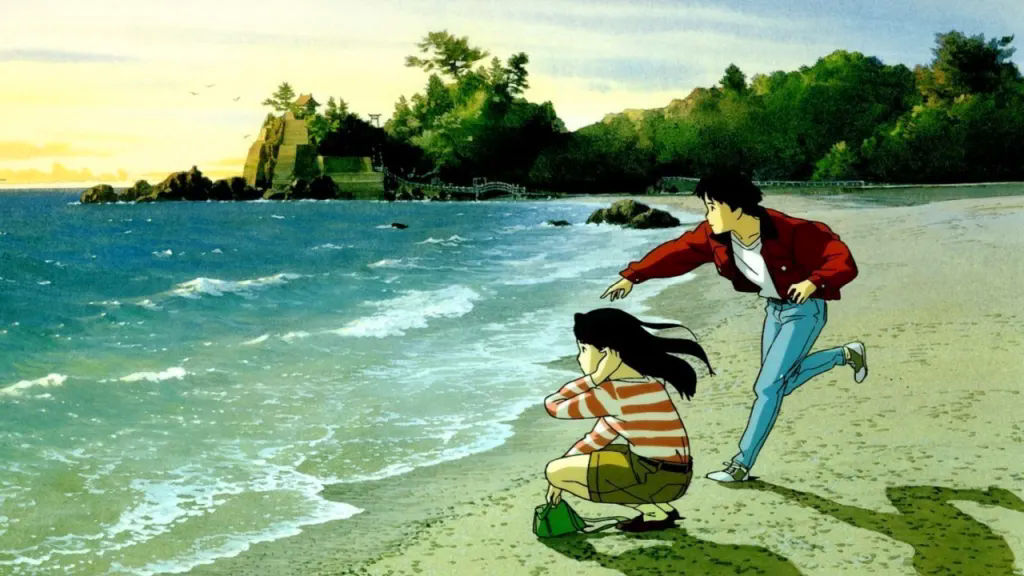
Ocean Waves is a coming of age tale about a student named Rikako Muto who transfers to a new high school. Rikako is talented in academics and sport, but comes off as arrogant to many of the students at her new school. However one of her classmates, Taku, thinks that Rikako is unhappy after leaving Tokyo. Taku gets entangled in Rikako’s life after Taku lends her ¥60,000, which she fails to promptly repay. When Taku gets a phone call from Rikako’s friend Yumi, who is stressed because Rikako tricked Yumi into getting a plane ticket (which was paid for with Taku’s money) for a concert when the real destination was…
-
Ran (1985)
Akira Kurosawa’s Ran (乱, meaning “chaos” in Japanese), an epic film inspired by Shakespeare’s King Lear, tells the story of an elderly warlord, Lord Hidetora Ichimonji (Tatsuya Nakadai), who decides to retire and give his empire to his three sons: the eldest, Taro (Akira Terao), who is to rule, his second son Jiro (Jinpachi Nezu), and his third Saburo (Daisuke Ryu). Hidetora’s announcement of this takes place in the opening scene on a idyllic day in the mountains with his sons, his men, lords from neighboring lands, and the fool. Hidetora envisions that his sons will rule as a strong unit, giving an example of three arrows and how they…
-
From Up On Poppy Hill (2011)
When Umi Matsuzaki (Masami Nagasawa), a girl living in a boarding house that was once a hospital, meets a member of their school’s newspaper club, Shun Kazama (Junichi Okada), in their mutual effort to clean up the school clubhouse, they form a bond and begin to unravel their mysterious past. Set in Yokohama, Japan in 1963, this is a story of determination, friendship, and family. From Up on Poppy Hill was directed by Gorō Miyazaki (also known for directing Tales from Earthsea and Earwig and The Witch), with screenplay written by Hayao Miyazaki (who also wrote and directed Laputa: Castle in the Sky, My Neighbor Totoro, and Kiki’s Delivery Service, among others) and…
-
“Here Comes the Night Time” – Arcade Fire
Good night 🌙
-
Exit 8 (2026)
Liminal spaces, often empty, sterile, fluorescent-lit rooms and hallways, represent places of in-between, of transition, or on the threshold of one state of being to another, and seem to be a growing theme in movies, especially with the recent A24 release Backrooms (2026) which solely focuses on these places. Increasingly, viewers want to take a deep look into these spaces and process the eeriness. Often, these are rooms or hallways that we pass through quickly, without giving them much thought, but when the Lost Man (played by Kazunari Ninomiya, known from 2006’s Letters from Iwo Jima) gets stuck in a subway station, he realizes he must take a closer look…
-
“Power and Glory” – Phil Ochs
American music I love ❤️🤍💙