Ecuadorian Poetry
Plane tickets to Quito have been bought, and in my ongoing cultural exploration of Ecuador this week I came across some of Ecuador’s most illuminating poets. I’ve picked a few Ecuadorian poems that I’ve read so far to share here, with translations when I could find them. Here are poems by David Ledesma Vásquez, Alfredo Gangotena, and one of Ecuador’s most famous poets, Jorge Carrera Andrade. In addition to these poets, Nelson Estupiñán Bass, Jorge Enrique Adoum, Efrain Jara Idrovo, Francisco Granizo Ribadeneira, and poets of the Generación decapitada literary movement Medardo Angel Silva, Ernesto Noboa y Caamaño, Arturo Borja, and Humberto Fierro, are also considered to be exceptional Ecuadorian poets.
David Ledesma Vásquez
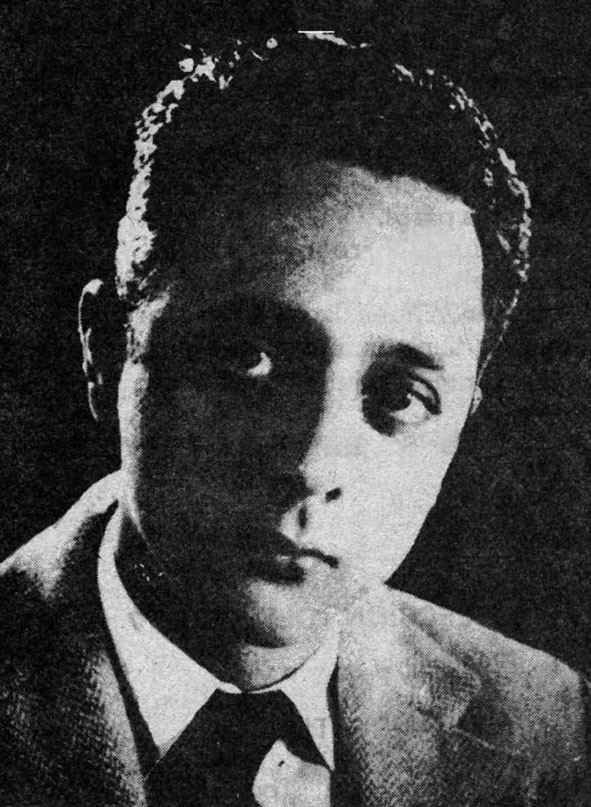
Writer and theater actor David Ledesma Vásquez was born in Guayaquil, Ecuador on December 17, 1934 to a wealthy family. However, life at home was turbulent because his family did not accept his homosexuality or his love of literature, but that did not stop him from pursuing his passion for writing. During the 1950s, he became a prominent figure of a locally famous poetry group of seven poets called “Club 7.” His first book of poetry was titled Cristal (1953) and he wrote his second book of poetry, Club 7 (1954), with the remaining four members of the group (by this time, two members had left the group after learning that Vásquez and another member were gay). He also wrote Gris (1958), a collaborative collection called Triángulo (1960), and Cuaderno de Orfeo (1962). Vásquez died by suicide at the very young age of 26, on March 30, 1961, but after his death he gained a cult following and his legacy continues to this day.
Here is the poem “Theory of the Flame” (Teoría de la Llama) by David Ledesma Vásquez with English translation by Richard Gabela, from Ecuadorian Literature.
| Theory of the Flame by David Ledesma Vásquez | Teoría de la Llama por David Ledesma Vásquez |
| I am no longer the son of my parents, the nephew of my aunts, the grandson of my grandmother; nor the citizen who carried an ID card number 1317284, who once stood to sing a national anthem and signed: David Ledesma on letters, on checks, on songs. I have died within myself to be reborn. A new being clothes me now. I can no longer say I am a man, or that I dwell in any place, or that I love, or that I am. I am no longer. I transfigure into a pure flame of Poetry that burns, crackles, and roars from within. I may have a face like the wind, a bone like a river, a death like a song. My being is not this outer shell. It is not me. Nor my family. Nor my homeland. Not even my name. It is a luminous, immaculate space, an undefined point, intangible, ungraspable, indescribable. A fragment of force, of struggle, nourished by its own searing embers. Now I can die, or I can live. Stones may fall upon my body, the ground may give way beneath my feet, and yet—I will not fall, I will not feel pain. The Flame sustains me. It holds me up. I am entirely possessed by a force that is magic and harmony. I do not seek beautiful words, nor do I desire noble sentiments; I do not even seek the melody of a voice. I seek nothing. My voice is part of the Flame, an instrument in service of the Flame. And this fire— lethal, sacred, inexplicable— nourishes me, possesses me. And I burn, nothing more. I am touched by Grace and by Mystery. | Ya no soy más el hijo de mis padres, sobrino de mis tías, nieto de mi abuela; el ciudadano que portaba la cédula número 1317284, que −en pie− cantaba un himno nacional y que firmó: David Ledesma sobre cartas y cheques y canciones. He muerto en mí para resucitarme. Un nuevo ser me viste. Ya no puedo decir que soy un hombre ni que vivo en tal parte, ni que amo, ni que soy. Ya no soy. Me transfiguro en una entera llama de Poesía que arde, crepita y ruge desde adentro. Puedo tener un rostro como un viento, un hueso como un río, una muerte como un canción. Mi ser no es esta costra. No soy yo. Ni es mi familia. Ni es mi pueblo. Ni es siquiera mi nombre. Es un espacio luminoso y puro. Un punto indefinido. Intangible. Inasible. Indescriptible. Una partícula de fuerza, de combate que me nutre con sus tremendas brasas. Ahora puedo morir, puedo vivir también, sobre mi cuerpo pueden caer piedras, puede, bajo mis plantas hundirse el suelo: y no caeré, ni sufriré dolor. La Llama me alimenta. Me sostiene. Estoy enteramente poseído de una fuerza que es magia y armonía. No busco las palabras hermosas, ni quiero los sentimientos nobles; no busco ni siquiera el tono melodioso de la voz, no busco nada, mi voz es parte de la Llama, es un instrumento al servicio de la Llama. Y este fuego letal, sagrado, inexplicable, me nutre y me posee. Y ardo nada más. Tocado estoy de Gracia y de Misterio. |
Alfredo Gangotena
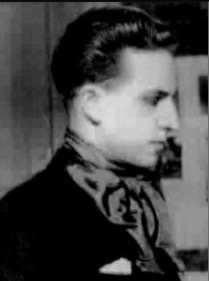
Alfredo Gangotena was an Ecuadorian poet who wrote in both the Spanish and French languages. He was born on April 19, 1904, also in Guayaquil, Ecuador, and moved to Paris at the age of 16. There he became friends with the likes of writer and director Jean Cocteau, Franco-Uruguayan poet and writer Jules Supervielle, and French writers and painters Henri Michaux and Max Jacob. His most famous works are his first book of poetry, Origénie (1928), and his last book of poetry including Spanish language poetry and some of his own translations from French to Spanish, Tempestad Secreta (1940). Gangotena died after enduring an emergency appendectomy on December 23, 1944 in Quito, Ecuador.
Here is an excerpt from a poem written for Henri Michaux, “Bebida Turbia” (Cloudy Drink), from Altazor, and translated with apologies with DeepL because I could not find any English translations.
| from Cloudy Drink by Alfredo Gangotena | de Bebida Turbia por Alfredo Gangotena |
| to Henri Michaux I hear your waves, ineffable night, your breath, oh queen of dreams, in my city. The ode begins: let the printing press moan within me. Melt this order, red acid of summer! And let me feel the green flanks of the meadow. The image of the Holy Spirit burns behind the stained glass windows; Its embroidered wings of love hang from the ends of the lintel, And the umbelliferous shadows of honey embrace and penetrate me. Its burning, panting shadows around the flowers: Pentecost of my fathers. | a Henri Michaux Escucho tus ondas, inefable noche, tu soplo, oh reina del sueño, en mi urbe. La oda comienza: que muja en mi la imprenta. ¡Funde este orden, ácido rojo del estío! Y que yo palpe las verdes ancas de la pradera. La imagen del Espíritu Santo se inflama detrás de las vidrieras; Sus bordadas alas de amor penden de las extremidades del dintel, Y las umbelíferas sombras de miel me abrazan y me penetran. Sus sombras ardientes y jadeantes en torno de las flores: Pentecostés de mis padres. |
Jorge Carrera Andrade
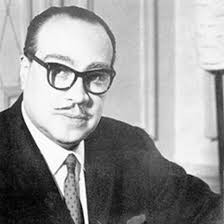
Poet, essayist, journalist, and diplomat Jorge Carrera Andrade was born in September 18, 1903 in Quito, Ecuador, and is one of the country’s most celebrated poets. One of the main themes in Andrade’s poetry is the ecology of Ecuador, celebrating the landscape and biodiversity of the country. His poetry has been lauded by fellow poets including Archibald MacLeish, Carl Sandburg, and William Carlos Williams; and most of his works have been translated into English, French, Italian, and German. The 1972 collection of poems, Obra poetica completa, contains the entirety of his poetry. He died in Quito on November 7, 1978.
Here is the poem “Sunday” (Domingo) from Century Of The Death Of The Rose: Selected Poems, 1926-1976 and translated by Steven Ford Brown.
| Sunday by Jorge Carrera Andrade | Domingo por Jorge Carrera Andrade |
| Fruit seller church seated at the corner of life: crystal orange windows, the sugar cane organ. Angels: little chicks of Mother Mary. The blue-eyed bell wanders off on bare feet throughout the countryside. Sun clock: angelic burro with its innocent sex; wind, in Sunday best, bringing news from the mountains. Indian women with loads of vegetables embracing foreheads. The sky rolls up its eyes when it sees the church bell run barefoot from the church. | Iglesia frutera sentada en una esquina de la vida: naranjas de cristal de las ventanas. Organo de cañas de azúcar. Ángeles: polluelos de la Madre María. La campanilla de ojos azules sale con los pies descalzos a corretear por el campo. Reloj de Sol; burro angelical con su sexo inocente; viento buen mozo del domingo que trae noticias del cerro; indias con su carga de legumbres abrazada a la frente. El cielo pone los ojos en blanco cuando sale corriendo de la iglesia la campanilla de los pies descalzos. |


You May Also Like

2025: Year in Review

Planning for a Trip to Ecuador